
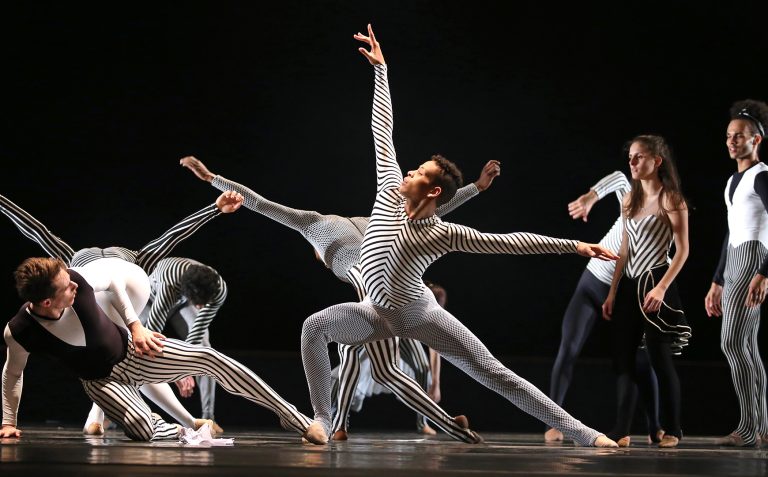
Riddles

2018

/

TECHNICAL DATA

Choreography
Dany Bittencourt

Music
Edward Elgar "Riddle Variations"

Costumes
Fábio Namatame

Choreography Assistant
Patricia Alquezar

Light Design
Cristiano Paes


Synopsis
"What is hidden is essentially musical and cannot be translated into words." It is said that one day in 1898, after a tiring day of teaching, Edward Elgar began improvising on the piano. One of the melodies he improvised caught the attention of his wife, Caroline Alice Elgar, who asked him to repeat it. Then, to entertain her, he began improvising variations on this melody, each in the style of a friend. Some time later, Elgar expanded these variations and orchestrated them, transforming the piece into the "Enigma Variations." Elgar dedicated the work to "my friends portrayed in it"; each variation shows an emotional portrait of some of his closest social relationships, which is explored individually by the dancers of the Cisne Negro Dance Company, uniting the "old" with the "new.".

Year of debut
2018

Dany Bittencourt

Artistic name Dany Bittencourt began her studies at the Cisne Negro Ballet Studio at the age of 3 and graduated from the Royal Academy of Dancing in London, in the advanced level. She took classical ballet improvement classes in London with Merly Park and Shirley Graham, among others. She trained in classical and contemporary technique, spending 6 months at Les Ballets Jazz de Montreal and 6 months at Le Grand Ballet Canadien. de dança, having performed throughout Brazil and in countries such as Africa, Scotland, Spain, England, United States, Argentina, Canada, Uruguay, Germany, Paraguay, Chile, interpreting works and acting as assistant to important national and international choreographers and teachers, such as Mark Baldwin (England), Gigi Caciuleanu, Patrick Delcroix (France), Itizik Galili (Holland), Victor Navarro (Spain), Marc de Graef (Portugal), among others. She is Rehearsal Director of cisne negro cia. de dança, where she also acts as choreographer, having in her curriculum works created especially for the company: Baobá (2010, with general direction by José Possi Neto), Abacadá (2009 - Choreographic Direction), Forrolins (2009), Atmosferas (2006); A Viagem de Quixote (2005), Anéis (2003), Em Caso de...(2001) and Vem Dançar (2000), besides works as "guest choreographer": Forrolins (Chile), Imagens Sonoras (Balé da Cidade de Taubaté), Don Giovanni (São Paulo).